
Last Posts
Cover Story
Chiriqui: Panama’s Rising Nature Destination for International Travelers
At a time when global tourism prioritizes authentic experiences, connection with nature, and sustainable travel, Chiriqui province is establishing itself as one of Latin America’s most highly recommended nature destinations.
International Recognition
Major international recognition came with its inclusion in Lonely Planet’s "Best in Travel 2025" list—featuring the world's top regions to visit—compiled by one of the globe's most influential travel guides. The publication highlighted Chiriqui for combining nature, culture, gastronomy, and sustainability in a single destination, a distinction that continues to boost its international profile throughout 2026.
A Wide Range of Activities
Few regions in Latin America offer such great diversity within such short distances. On a single trip, visitors can climb the Baru Volcano—Panama’s highest peak at 3,475 meters above sea level—and hike cloud forest trails inhabited by the majestic resplendent quetzal. They can discover waterfalls and mountain rivers, visit estates producing the prestigious Geisha coffee, and, within just a few hours, sail among the islands of the Gulf of Chiriqui—a true paradise on Panama’s Pacific coast.
Protected Areas of Great Natural Value
Much of this natural heritage is safeguarded by a significant conservation system. Volcan Baru National Park protects the high-altitude forests surrounding this towering peak in Chiriqui; La Amistad International Park—shared with Costa Rica and designated both a UNESCO World Heritage Site and a Biosphere Reserve—protects one of Mesoamerica’s most biodiverse ecosystems. And the Gulf of Chiriqui Marine National Park preserves over twenty islands, coral reefs, and mangrove forests, as well as waters visited annually by humpback whales, dolphins, and various sea turtle species. These are complemented by the Fortuna Forest Reserve, renowned for its cloud forests and its importance for water conservation and birdwatching, and the Playa La Barqueta Agricola Wildlife Refuge, one of the key sea turtle nesting sites on Panama’s Pacific coast.
A Global Benchmark for Specialty Coffee
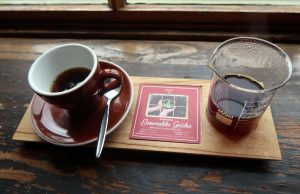
The province is also internationally recognized as the birthplace of Panamanian Geisha coffee, considered one of the finest and most exclusive varieties in the world. In Boquete and Tierras Altas, coffee estates offer tours where visitors can learn about the production process and taste coffees that have fetched record prices at international auctions, establishing Panama as a global leader in specialty coffee.
Activities Connecting with Nature and Communities
For those seeking outdoor thrills, Chiriqui offers hiking, rafting, mountain biking, canopy tours, sport fishing, birdwatching, and agritourism experiences. These activities complement a tourism offering increasingly valued by travelers who wish to connect with nature and local communities. Nature, adventure, culture, and sustainability converge in a region that continues to captivate visitors from around the globe and reaffirms its status as one of Latin America's premier natural destinations.
Special Guest
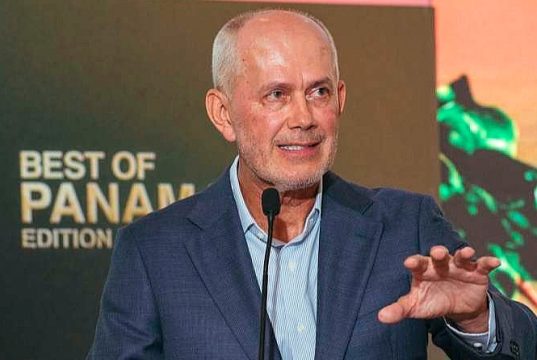
Mavis Polo Cheva: “Tourism is the most profitable investment for improving...
Chiriqui is a province rich in natural assets, human development, and immense economic potential. It is a region working hard to become an international logistics hub—a goal that requires constant , as well as focused effort. For this reason, our special guest is the President of the Chamber of Commerce, Industries, Agriculture, and Tourism of Chiriqui (CAMCHI) for the 2026–2028 term . She is a business leader promoting an agenda centered on competitiveness and the development of commerce, agribusiness, tourism, and logistics. In an exclusive interview, Mavis Polo Cheva shares her vision of the economic and tourism development of Chiriqui province exclusively with The Visitor - El Visitante.
What does tourism mean for the economy of Chiriqui? How much does it contribute to the region's social and cultural development?
"Tourism is one of our region's major economic engines because it benefits a vast chain of economic activities. When a visitor arrives in Chiriqui, they do more than just stay in a hotel room; they dine at restaurants, use transportation, buy handicrafts, shop at local businesses, hire tour guides, and enjoy our agricultural and culinary products. It is an inexhaustible source of direct and indirect employment for thousands of families.
Beyond the economy, tourism holds incalculable social and cultural value: it encourages us to value, preserve, and take pride in our historical heritage, traditions, and natural resources.
At the Chiriqui Chamber of Commerce, we maintain that tourism is the most profitable investment for improving the community's quality of life”.
Is it possible to create a tourism circuit connecting Boquete, Tierras Altas, and David?
"It is a fact that when people think of Chiriqui, the first name that comes to mind is Boquete. While this represents a major achievement in terms of branding, our province is far more than just a single destination.
Chiriqui is a land of contrasts: Tierras Altas, with its agricultural and culinary prowess; Rio Sereno, boasting immense potential for cross-border and nature tourism; Boca Chica and the Gulf of Chiriqui, renowned for their beaches and sport fishing; Las Lajas, home to one of the longest and most beautiful stretches of coastline on Panama’s Pacific side; Alanje, with its priceless historical and religious heritage; and Gualaca and Hornito, serving as gateways to La Amistad International Park and adventure tourism.
The real challenge lies not in promoting each destination in isolation, but in integrating them. Today’s traveler seeks meaningful experiences, not merely a geographical location. Therefore, we must design integrated tourism circuits that encourage visitors to explore the province in a single trip, leveraging the complementary strengths of each district”.
Puerto Armuelles is well-suited for logistics and tourism. What does it need?
"Puerto Armuelles possesses immense natural and historical wealth. It has beaches, a banana-industry heritage, proximity to Costa Rica, and enormous potential for nautical and nature-based tourism. To develop that potential, we need three fundamental elements:
First, modern infrastructure. Second, public and private investment. And third, comprehensive planning that combines tourism, logistics, urban development, and environmental protection. It is not enough to simply build infrastructure; we must create a sustainable tourism destination”.
What are the three tourism products with the greatest international potential?
"First: Nature and adventure tourism. Few regions combine mountains, beaches, trails, national parks, and biodiversity the way Chiriqui does.
Second: Gastronomy and coffee tourism. Our specialty coffees are world-renowned and can serve as the centerpiece for high-value experiences.
Third: Meetings, congress, and business tourism. An increasing number of organizations are seeking attractive venues for corporate events. Here, the city of David plays a pivotal role thanks to its hotel infrastructure and connectivity”.
How can logistics development boost tourism?
"In reality, both sectors reinforce each other in a virtuous circle. Robust logistics infrastructure translates into modern roads, efficient airports, competitive ports, and superior connectivity—factors that, together, facilitate and stimulate the arrival of visitors”. Photos courtesy: Mavis Polo Cheva – Camara de Comercio de Chiriquí."
Special Report
Grupo Xcape Celebrates 10 Years in Panama Giving Graduate Students the...
XKP Turismo S.A. de CV and MCM Panama Travel S.A. have joined forces to form Grupo Xcape, the largest youth tourism company in Latin...
Flavors
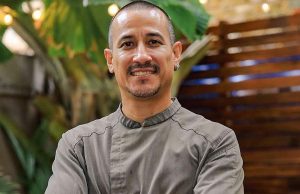
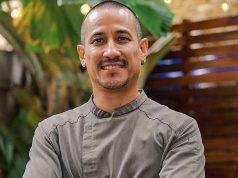
Chef Jose Aparicio: “It is essential to understand the origins of...
Grasping a country's gastronomy and its full potential requires professionals who begin developing a deep knowledge of the ingredients and spices that distinguish Panamanian recipes from an early age. For this reason, our featured guest is a chef who started out helping his mother and aunts in the kitchen during family gatherings as a child. He gained experience in fast food before finding his path alongside renowned chefs such as Fabien Mingy, Luis Mendizabal, Cuquita de Arias, and Laurent Tourondel. Today, Chef José Aparicio heads the kitchen at the renowned Kaandela restaurant in Casco Antiguo and shares his vision of Panamanian gastronomy—and its contribution to the development of national tourism—exclusively with The Visitor - El Visitante.
Panamanian cuisine has everything it takes to become an international culinary destination with a distinct identity. What would it take to elevate it to that level?
"First—and for me, most importantly—we need a united sector aligned with a shared vision. Panama is already part of the international gastronomic scene, and we have wonderful colleagues who proudly represent our cuisine.
We need to solidify a structure that positions us as a top-tier culinary destination. When we work toward a shared vision, everything else follows naturally."
Which Panamanian dishes truly embody the country's cultural and historical essence, and what can we do to help them transcend our borders?
"For me, there are several. They range from something as simple yet steeped in history as a torrejita de bacalao (salt cod fritter) to something as iconic and authentic as sancocho.
As professionals, we have a responsibility to know our history; today’s market demands it. Understanding the origins of our dishes is essential to conveying their true essence. We don't need to 'elevate' our native cuisine; we need to learn how to communicate the significance these dishes hold within our culture."
Panamanian gastronomy needs to look inward to find ingredients that set our culinary offerings apart. What do you consider the culinary industry's main challenge in achieving this and showcasing Panama from a different perspective?
"We need to give greater visibility to those products. It can be a complex path, but that is precisely where the value lies. It is a challenge worth taking on because not only do we learn as chefs, but we also help rescue ingredients that have been forgotten—or, in some cases, never became widely known.
Many of those products were never viewed as possibilities for creating new recipes. Rediscovering and highlighting their value is also a way to speak about Panama, to celebrate our essence, and to tell our story through gastronomy."
Kaandela restaurant is located in Casco Antiguo. How does this important historic district contribute to creating an immersive and diverse dining experience? What remains to be developed?
"Casco Antiguo offers a unique blend of history, architecture, culture, and gastronomy. Support from Panama City Mayor's Office has been crucial in revitalizing this area, and I believe they have done a great job in that regard.
It is a diverse place where various culinary concepts and offerings coexist, enriching the experience for our visitors. The next step is to continue showcasing that full potential—both locally and internationally—so that more and more people discover the culinary richness Panama has to offer."
What is Kaandela’s culinary concept, and what kind of experience does it aim to create for local and international diners?
"Kaandela is a restaurant that explores the Panamanian landscape. We undertake expeditions to various regions of the country in search of unconventional ingredients. On each trip, we learn about the culture, cuisine, and techniques that local communities have preserved for generations.
After each expedition, we research these ingredients, understand their history, and explore new ways of interpreting them using contemporary techniques. It is a challenge that keeps us constantly learning and evolving creatively.
Our goal is for diners to share in those experiences—to discover new flavors and learn the stories of the communities we visit. It is our way of telling the story of Panama with passion and authenticity."
Tell us about the restaurant's three most popular dishes and why they resonate so strongly with diners.
"We know exactly which dishes resonate most with our diners.
Buscando Guayaba: This is undoubtedly our signature dessert. It perfectly embodies the Kaandela concept, combining identity, a sense of place, creativity, and memory in a single dish.
Fish Crudito: The balance of acidic flavors, spicy notes, and crunchy textures makes this a very fresh, light dish full of personality. Zapato de Langosta: Much of our menu is built around non-traditional ingredients; this dish stars *arroz rojo colorado* (red rice), sourced through the work of the Toabré Foundation in El Copé. It is an extraordinary ingredient that reflects our commitment to researching and preserving Panama's culinary heritage."
History and Culture
The David Act: The Moment Chiriqui Defended Panama’s Right to Determine...
For decades, the story of Panama’s separation from Colombia has been associated almost exclusively with November 3, 1903. Yet, more than forty years earlier, a group of citizens gathered in David committed to writing one of the most compelling political arguments for the Isthmus’s right to decide its own future.
Among these documents, one stands out—though little known outside academic circles—as playing a pivotal role in the evolution of Panamanian separatist thought: the Act of the Popular Assembly held in David City on March 31, 1861, known simply as the David Act.
A Country in the Midst of Crisis
In 1861, the State of Panama was part of the Granadine Confederation, during a period marked by civil wars, constitutional changes, and profound political instability in Colombia.
Since 1830, Panama had been the scene of various movements for autonomy and separation, including those led by Jose Domingo Espinar, Juan Eligio Alzuru, and Tomas Herrera—who proclaimed the Free State of the Isthmus in 1840. The David Act is part of that political tradition.
The Santiago Declaration
On March 21, 1861, 151 prominent figures gathered in Santiago de Veraguas and approved a momentous document. In it, they declared that the State of Panama should secede from the Granadine Confederation and organize itself as an independent state, calling upon the governor to convene an extraordinary legislative session to determine the political future of the Isthmus. That resolution was sent to the State's other departments to gauge whether there was sufficient support for a decision of such magnitude.
The Response from David City Ten Days Later
On March 31, 1861, citizens of David gathered for a public assembly. After reading the document from Santiago, they approved an extensive political declaration stating that the majority of the Department of Chiriqui fully shared the conclusions reached in Veraguas.
One of its most memorable passages asserts that experience had shown the union with New Granada had not led "to the happiness of the former”, while another maintains that the ideal of the Isthmus's independence could only be rejected due to vested interests or political passions. These ideas foreshadowed many of the arguments that would resurface during the separation of 1903.
A Legacy That Transcended Its Time
The movement of 1861 ultimately did not succeed. Political circumstances shifted, and the separatist project was abandoned before it could take hold. Nevertheless, its historical significance remains undiminished.
The David Act demonstrates that, decades prior to 1903, a political consciousness already existed—one that viewed Panama as a community with its own distinct interests, separate from the internal conflicts plaguing Colombia. Today, stands as a vital document for understanding that Panamanian independence was not a spur-of-the-moment event, but rather the result of a long, complex historical process deeply rooted in the aspirations of those who—from various corners of the Isthmus—envisioned a country capable of self-governance.
Caldera Painted Stone: Ancestral Legacy Holding the Secrets of Greater Chiriqui
Nestled among the mountains, rivers, and verdant landscapes of Caldera, a small community located just minutes from Boquete, lies one of Panama's most fascinating...
Our Land
Tierras Altas: Experiences Amidst Mountains, Nature, Coffee and History
Amidst cloud forests, volcanoes, coffee plantations, farmlands, and the remnants of ancient civilizations, the Tierras Altas district in Chiriqui province has established itself as one of Panama’s most well rounded destinations for those seeking to connect with nature and enjoy authentic experiences. This region brings together some of the country's greatest natural, historical, and agricultural treasures.
Volcan Baru and Two Oceans
The journey begins at Volcan Baru National Park, home to Panama’s highest peak, rising 3,475 meters above sea level. Its trails wind through cloud forests teeming with extraordinary biodiversity, including the iconic resplendent quetzal, hummingbirds, orchids, and numerous other species of flora and fauna.
When weather conditions permit, reaching the summit offers one of Central America’s most extraordinary natural spectacles: the chance to view both the Pacific Ocean and the Caribbean Sea from a single vantage point.
A UNESCO-Recognized Biodiversity Sanctuary
Located very close to the volcano is La Amistad International Park (PILA), shared by Panama and Costa Rica and designated a UNESCO World Heritage Site and Biosphere Reserve. This important biological corridor protects vast montane forests considered among the most biodiverse ecosystems in Mesoamerica.
Its trails offer opportunities for hiking, birdwatching, and scientific tourism, making it a must-visit destination for those wishing to discover the natural richness that distinguishes the Chiriqui highlands.
Barriles Site: A Journey into Panama's Pre-Columbian Past
History holds a prominent place within the Highlands tourism circuit. The Barriles Archaeological Site—one of the country's most important pre-Columbian sites—is located in Volcan.
Its museum houses over 500 archaeological artifacts, including monolithic sculptures, ceramics, tools, and petroglyphs that bear witness to the legacy of ancient societies belonging to the Greater Chiriqui cultural tradition.
Cerro Punta: Panama’s Breadbasket
The landscape shifts upon arriving in Cerro Punta, recognized as Panama’s primary agricultural region. Its fertile soil yields a large portion of the vegetables, strawberries, and flowers that supply the country.
Agricultural activity has also spurred the growth of agritourism, offering visitors the chance to tour farms, learn about cultivation processes, and enjoy fresh produce straight from the fields.
Coffee Tourism
The Highlands (Tierras Altas) are also part of Panama’s prestigious coffee-growing region. The renowned Geisha coffee—considered one of the world’s most exclusive varieties and a winner of major international competitions—is cultivated in these mountains.
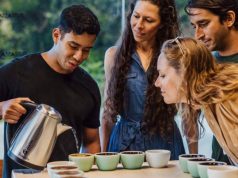
Coffee tourism experiences offer an up-close look at the entire production process, from harvest to cupping, connecting visitors to a tradition that has made Panamanian coffee a global benchmark.
Trails, Orchids, and Outdoor Experiences
Nature and adventure enthusiasts will find a spectacular setting here. The iconic Los Quetzales Trail connects Cerro Punta to Boquete, passing through one of Central America's best-preserved cloud forests, while the routes in Volcan Baru National Park offer challenges for hikers of all skill levels. The experience is rounded out by mountain biking, horseback riding, birdwatching, visits to Finca Dracula—renowned for housing one of the world's most important orchid collections—and relaxing moments in the hot springs of Volcan.
Touring Coffee Farms in Boquete: An Authentic and Memorable Experience
To speak of Boquete is to speak of coffee. Long before becoming one of Panama's most renowned tourist destinations, this picturesque valley was already...
More views
Health Tourism
Laboratorio Clínico Central, More than 60 Years Offering High Tech and...
In 1961, the first private laboratory opened in the Chitre City, offering its services to central provinces. Its founder, Jose María Rodriguez, opens the...
Special Note
Bocas Students Make Waves with Revive Reef Restoration Scholarship Program
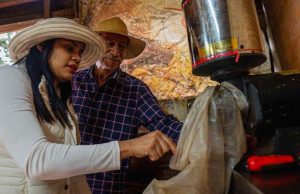
A pioneering scholarship program is turning the tide for both students and the ocean. The Revive Reef Restoration Scholarship Program, launched in late 2024 by Mother of Corals, has already yielded remarkable results—creating young conservationists while rebuilding fragile reef ecosystems.
Training for Local Students to Study Coral Reef Restoration
To date, the program has provided financial support and hands-on training for 17 local students since its inception to study coral reef restoration techniques. Over the course of several months, participants obtain their scuba certification from Bocas Pirates Dive Center and learn artificial reef methodology under the direction of Mother of Corals. So far 10 have graduated and 7 are on track to complete the program by the end of this year.
The impact has been twofold: not only have students gained valuable career-building experience in marine conservation, but the reefs themselves are beginning to flourish. Artificial reef structures were installed and coral fragments out planted across two local reef sites.
Bocas has historically not had many local community members introduced into a dive industry career path. This changes the potential for Bocas dive leaders to be Panamanian significantly. “I am very happy to witness the local youth seeing the underwater world from beneath the surface for the first time and showing so much interest, care and curiosity towards caring for nature - which is something they bring home to their friends and family”, says Alexander Keppel, co-owner of Bocas Pirates Dive Center.
The initiative also strengthens community ties. Students shared their knowledge through school presentations and public workshops, inspiring others to join the movement to protect the ocean.
The Success of Investing in Young People
“The best benefit of the program for me is the way Mother of Corals (MOC) restores the corals in my home and teaches us how to care for them”. Says program participant Norishel Navarro. “This allows me to learn about marine life and help more species find a home”.
“The success of this first cohort proves that investing in young people is investing in the future of our reefs”, said Krista Shoe, Founder of Mother of Corals. “We’re helping to build the next generation of ocean stewards”.
Buoyed by its success, the Revive Reef Restoration Scholarship Program plans to expand this year, increasing the number of scholarship recipients and reef sites supported. We are so thankful for the support of the Red Frog Foundation, which has generously donated much of the funding for this initiative. If you would like to support this program, please visit: https://motherofcorals.org/
For more information:
Instagram: https://www.instagram.com/mother.of.corals/
Facebook: https://www.facebook.com/motherofcorals/
Website: https://motherofcorals.org/ Photos courtesy: Mother of Corals
Chiriqui: Agro-industrial Development and Logistics Potential with an International Outlook
For decades, Chiriqui has served as the agricultural backbone of Panama. Its high-altitude coffee, livestock farming, dairy products, and horticultural output have sustained both domestic consumption and a significant portion of the country's food supply. However, the province's economic narrative has recently begun to shift toward a new focal point: logistics and strategic infrastructure. This is an ongoing transition that is reshaping how western Panama engages with both domestic and international trade.
Agro-industry: The Primary Driver of Economic Activity
The economy of Chiriqui maintains a distinctly agro-industrial structure. This sector remains the leading source of employment and economic activity in the province, featuring production chains that span from the Highlands to the valleys of the David District.
However, the model faces structural limitations: high logistics costs to the country's main export hubs, a lack of advanced industrialization, and a reliance on intermediaries to bring products to international markets.
Infrastructure: A Factor Transforming the Economy
In recent years, public investment in roads, regional connectivity, and modernization of infrastructure has been a key driver of change in Chiriqui. Improvements to routes serving David, the Highlands, and the border with Costa Rica are fostering greater integration across the region's productive areas.
This process is beginning to create the material conditions necessary for more complex regional integration in the future.
Puerto Baru: A Project Redefining the New Phase
The flagship project of this new phase is the development of Puerto Baru, a multipurpose port initiative with an estimated investment of nearly $250 million.
Its goal is to enable a portion of the western region's output to access more direct export routes, thereby reducing reliance on traditional hubs in the country's central region.
This future logistic hub has attracted business interest, it remains in the development phase; consequently, its economic impact will be felt in the near future.
Puerto Armuelles: Key to Infrastructure Diversification
In parallel, the rehabilitation of the Puerto Armuelles area aims to bolster the logistics capacity of western Chiriqui. Although it is not yet a fully operational port hub, it plays a complementary role within the strategy to diversify maritime infrastructure.
The Panama-David Railway Corridor
The concept of a railway corridor between Panama and Chiriqui has gained traction as a vision for national integration. However, it currently remains in the conceptual and design phase.
Its prominence in economic discourse reflects a growing perception: the need to improve structural connectivity in western Panama.
Towards an Agro-Logistics Corridor
Today, Chiriqui is moving toward becoming an international logistics hub, with plans to build the consolidated, multimodal infrastructure required to compete with established logistics centers in the region.
Yet, a more strategically significant development is underway: the gradual formation of an Agrologistics corridor linking production with export potential. Chiriqui is currently a region in transition a territory where the traditional economy and logistics ambitions are beginning to converge.
Leisure
Boca Chica: Where the Adventure to Discover the Wonders of the...
Located on the coast of the San Lorenzo district in Chiriqui province and at only one hour by car from David City, Boca Chica has established itself as one of Panama's most appealing coastal destinations. This quiet fishing village serves as the main gateway to the Gulf of Chiriqui Marine National Park—a natural sanctuary where white-sand islands, crystal-clear waters, mangroves, and extraordinary biodiversity create the perfect setting for those seeking relaxation, adventure, and a connection with nature.
An Archipelago Waiting to Be Discovered
Boats depart daily from the Boca Chica dock for some of the most spectacular islands in the Panamanian Pacific. Islands such as Gamez, Bolaños, Boca Brava, Paridas, Saino, and Linarte make up this mosaic of natural landscapes, where virtually pristine beaches and calm waters invite visitors to soak up the sun, swim, or simply admire the beauty of the surroundings.
Experiences at Sea
The waters of the Gulf of Chiriqui provide the ideal setting for snorkeling, scuba diving, kayaking, paddleboarding, and boat tours among the islands. Coral reefs teem with a wide variety of tropical fish, sea turtles, and other species, turning every excursion into an opportunity to discover the richness of the marine ecosystem.
A Destination for Fishing Enthusiasts
Boca Chica is also internationally renowned for the quality of its sport fishing. Anglers from home and abroad visit year-round in search of species characteristic of the Panamanian Pacific—such as tuna, roosterfish, jack, and snapper—cementing the destination's status as a regional leader in the sport.
A Wildlife Spectacle
Between July and October, the waters of the Gulf of Chiriqui welcome humpback whales that arrive to breed and raise their calves. This natural spectacle is complemented by the frequent presence of dolphins and abundant birdlife inhabiting the mangroves and coastal forests, making Boca Chica a prime destination for wildlife viewing.
Amazing Dining and Accommodation
The experience is rounded out by a diverse range of boutique hotels, eco-lodges, and small lodgings that blend harmoniously with the natural surroundings. Local restaurants serve fresh fish and seafood, highlighting the flavors of the Panamanian Pacific and making the cuisine another of the destination's major attractions. Boca Chica is a destination where the ocean, nature, and tranquility combine to offer unforgettable experiences.
Boquete: A Paradise Where Nature Can Be Enjoyed Through a Wide...
Over the past 10 years, Boquete has established itself as one of Central America's most attractive nature and adventure destinations. Surrounded by mountains, cloud forests, crystal-clear rivers, and dominated by the imposing silhouette of the Baru Volcano, this picturesque district offers experiences that combine adrenaline, spectacular landscapes, and a unique connection with the natural environment.
Hiking: A Way to Traverse Lush Forests
Hiking is undoubtedly Boquete's most iconic activity. Its numerous trails wind through forests teeming with biodiversity, past hidden waterfalls, and along natural viewpoints that allow you to discover some of Panama's most breathtaking landscapes. Routes like the Los Quetzales Trail, the ascent of the Baru Volcano, and the hikes to the Three Waterfalls attract thousands of visitors each year who seek to explore the region's natural wealth at their own pace.
Birdwatching, a Regional Leader in Ecotourism
Birdwatching is a close second in popularity, an activity that has made Boquete an international benchmark for bird lovers. Thanks to its location within the Talamanca Mountain Range biological corridor, the area is home to hundreds of species, including the majestic resplendent quetzal, considered by many observers to be one of the greatest natural treasures of the Americas. The forests of Finca Lerida, the Los Quetzales Trail, and the Volcan Baru National Park are some of the prime locations for this experience.
Zip-lining, an Intense Way to Explore Natural Landscapes
For those seeking more intense thrills, zip-lining or canopy tours offer a completely different perspective of the Boquete landscape. Suspended among the treetops, visitors travel along extensive circuits that traverse the cloud forest while enjoying panoramic views of the valley, the mountains, and the lush vegetation. This activity has become a favorite among families, couples, and adventure travelers.
Rappelling, an Activity Gaining Popularity
Boquete has also gained recognition among rappelling and rock climbing enthusiasts. The volcanic formations offer ideal conditions for descending rock faces, exploring waterfalls, and challenging climbing routes adapted to different experience levels. Although these disciplines attract a more specialized audience, each year new enthusiasts discover the region's potential as an adventure destination. Aside from the wide variety of activities available, what distinguishes Boquete is the opportunity to enjoy them in an exceptional natural environment. Few places in Panama allow you to observe quetzals at dawn, hike through cloud forests, glide above the treetops, and climb volcanic formations surrounded by mountainous landscapes, all in a single trip.
Isthmian News
Panama Shines at Korea Café Show as South Korea’s Barista Champion Wins National Title...
Seoul, South Korea – November 22, 2025 – Panama’s specialty coffee once again took center stage in Asia as Dongwhwan Ku, South Korea’s newly...

Panama Showcased Specialty Coffee at World of Coffee Geneva 2025 and Presented World of...
Panama, June 30, 2025 – Panama reaffirmed its status as global leader in specialty coffee at World of Coffee Geneva 2025, held from June...
More than 500 People Attended “Burning Women” at Santa Catalina in Veraguas Province
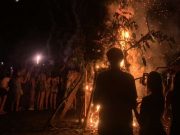
Burning Woman is an interactive temporal form of art in which people are welcome to add written messages to or their own personal touches...
Panama, The Best Place to Live According to the Latest Expat Insider Report from...
Panama was selected the best country to live for foreigners from 53 countries, according to the latest Expat Insider report from InterNations, a global...

Marketing Strategy and International Tourism Promotion Generated $1,697 Millions to Panama
PROMTUR Panama, destination marketing organization (DMO) reported a return on investment in international promotion and marketing of $69 for every dollar invested.
Panama April 2,...